Last month (September 2025) the Secretary of State for Culture,Media and Sport, Lisa Nandy, launched an attack on “political polemic presented as news” and cited Nigel Farage’s programme on GB News. She told MPs on the Culture Select Committee :
“Ofcom is currently consulting on tightening the rules around politicians presenting news programmes and news in any format and that is something that we as a government strongly support. We will look closely at what Ofcom present to us but it is an area in which we intend to act”.
Just in case Ofcom wasn’t listening, she said something similar at the Royal Television Society conference and again in an interview with the Media Confidential podcast. And in a further flourish before Ofcom announced its decision she followed up on research from Cardiff University, funded by AHRC and carrIed out by YouGov.This found ‘public opposition to allowing politicians to front current affairs programmes – contradicting research carried out by the regulator, Ofcom’. Responding to this finding the Secretary of State doubled down saying the public were “right to be concerned about elected politicians playing the role of news presenters”.
Now we have Ofcom’s decision about politician presenters in a document which also sets out its views on the responses to its consultation. Among those responses was one which I submitted with former Ofcom colleague Chris Banatvala.
There has been much confusion about what the Ofcom announcement means. First the easy bit: the original proposal which Ofcom put out to consultation has been dropped because a range of objectors (including us and GB News) argued it was unworkable. Now the complicated alternative. Ofcom has come up with its Plan B which some readers think is tightening the rules as Lisa Nandy wants and some think loosens them which she certainly doesn’t.
Chris Banatvala has done his own independent forensic examination of the announcement. He explains that Ofcom has decided not to make any changes to the Broadcasting Code which would tighten the rules but instead has refined its ‘non-binding guidance’ in a way which allows the Farage show to continue. He concludes “For the first time ever, Ofcom seems to be allowing politicians to present ‘news, in whatever form’ within non-news programmes but will then consider a number of factors before deciding whether the content is impartial” .
I read that as a loosening of the rules and you don’t have to take my word for it, the positive response from GB News to the announcement confirms this. But maybe the regulator won’t mind a bit of confusion all round, a bit of ‘creative ambiguity’ to leave some potential jeopardy for GB News if it goes too far for the regulator.
We await Ms Nandy’s judgement on whether Ofcom’s ‘Plan B’ has passed her test, has Ofcom tightened ‘the rules around politicians presenting news programmes and news in any format’? .
One other point worth making; the Ofcom announcement does not push back hard against criticism from us and some academics about the quality of that audience research which it has relied upon to justify its position. Instead it promises to ‘explore conducting further research into audience attitudes towards news and current affairs on TV and radio’.
So the next steps to watch out for:
Any response of any kind from Lisa Nandy as to whether Ofcom has met her test.
If it hasn’t, any sign of a way in which the regulator and the minister could find common ground, maybe fresh public attitude research.
Failing that, any sign that the Government does or doesn’t have the taste or the time for legislation?
Meanwhile any new complaints about GB News output which become test cases of Ofcom’s ‘Plan B’.
Some recommendations: Giles Winn’s newsletter ‘ScreenPower’ on Substack is a way of staying in touch with issues ‘where TV and Film meet politics and power’.Roger Bolton’s Beeb Watch podcast has an interview with Professor Stephen Cushion of Cardiff University about his research on the audience’s views on impartiality.
During the four year long debate about whether GB News are breaking the rules requiring impartial broadcast news there has been a noticeably missing voice, a clear view from the Labour Party . That situation ended at 10.45 am on Wednesday 10th September 2025 when the Secretary of State for Culture, Media and Sport, Lisa Nandy, was appearing before the CMS Select Committee. No transcript has yet been released so I have prepared one plus what I think are some key points. (If you want to see the video of the hearing it is here and the relevant section is at 10:45:00).
Lisa Nandy was answering a question about the BBC, talking about its funding and its independence, when she began what looked like a deliberate pivot:
“And If I may on that issue of independence the other thing that the BBC finds very challenging and you know the committee will know that there have been several challenging issues and areas where the BBC has fallen short in recent months is that they are rightly held to the highest of standards but there has been a fracturing of the news media and there are different standards being observed in other places.
“So to take a very clear example of something that this government and I feel very strongly about, there is a real importance for the public when they look at the news to be able to understand whether what they are seeing is political polemic or news. At the moment that situation is currently completely unsatisfactory and there has been a blurring of political polemic that is presented as news on other channels. I am really keen that as part of supporting not just the BBC but all of our public service broadcasters that we make sure that we get those rules right . Ofcom is currently consulting on tightening the rules around politicians presenting news programmes and news in any format and that is something that we as a government strongly support. We will look closely at what Ofcom present to us but it is any area in which we intend to act”.
Labour MP Paul Waugh then asked:
“By implication are you talking about GB News there, I mean obviously like me you’d be a strong supporter of freedom of speech and of the freedom of media and the press but at the same time if you switch on GB News at night it is basically a newspaper on TV format which is not meant to be the Ofcom rules is it?”
The Culture Secretary replied:
“I’ve had particular concerns raised with me by parliamentarians about the appearance of Nigel Farage presenting news programmes on GB News. I think that is a fair criticism from members of parliament of all political parties because the public have a right to know if what they are seeing is news and is impartial or is not and one of the challenges that then creates for public service broadcasters is that people lose trust in the news altogether. Now that is then a challenge for the whole country because the way in which people consume their news has polarised and fragmented and people are reading different accounts. Those shared spaces and that shared understanding is the basis of democracy is fracturing. I think that is very, very dangerous, a very dangerous position for a country to be in and it is something that we intend to robustly defend is the impartiality of our news. It is not for the government ever to stray into determining who can be featured on broadcast media and what is discussed, That is entirely a question for broadcasters whether its GB News, the BBC or others not least because they exist to hold the mirror up to government and subject us to scrutiny and that is essential in any democracy. But it is right and proper that as a government we ensure we have a proper framework so that viewers are empowered to understand if what they are seeing is news or is what they are seeing is political polemic presented as news”.
Some key points:
It may not have had the usual trappings of a major policy change, no pre-briefing, no press statement, but this was a Cabinet minister saying for the first time what, according to her, MPs of all parties have been telling her. Presumably that’s MPs of every party except Reform.
Why now? My hunch is that Labour have always thought this but decided they didn’t need to get involved publicly in what they saw as GB News helping Reform take voters away from the Conservatives. Maybe they’ve decided they are now losing out too and “intend to act”.
How would they act? Ms Nandy said “We will look closely at what Ofcom present to us” on “tightening the rules”. There are two problems with that.
Problem One: Ofcom doesn’t ‘present’ to Government on issues like this, that’s not how an independent regulator is meant to work. When Ofcom announce the outcome of their consultation on the rules (see previous posts) the Government will have to decide whether the problem has been solved or whether some other intervention is necessary, such as a tightening of the legislation.
Problem Two: as argued in previous posts Ofcom’s current plan will not ‘tighten’ the rules because it does not address the core problem, the regulator’s current view that Nigel Farage does not present ‘news’ but ‘current affairs’. That’s why GB News says: “The Culture Secretary is clearly either mistaken or misinformed about the nature of GB News programming.GB News has never and does not use politicians to present news programmes. Politicians can present current affairs programmes.”
Any clues on how the problem could be solved ? Interesting that the SoS mentioned ‘news in any format’. This underlines the point that the Broadcasting Code requires due impartiality in ‘news in whatever form’ not just news bulletins. A revised piece of guidance to the code could build on this and be more precise about what is ‘news in whatever form’ overturning Ofcom’s current view that News Presenter of the Year Nigel Farage doesn’t present news.
Does Lisa Nandy’s involvement help or hinder the argument for the proper enforcement of the rules? The conventional wisdom is that she overplayed her hand on the BBC’s Glastonbury mistakes but learned that lesson. The qualifications set out in the second half of the full transcript of her remarks on impartiality seem to support this.
Next step? Ofcom executives now have to make up their mind after the consultation knowing that whatever they decide the Government have a view and that all the other political parties (and that includes Reform) feel they have a stake in the outcome too.
For 22 years the Communications Act has been the law of the land on all things broadcasting. This week the regulator created by that act, Ofcom, announced it was starting a process that may lead to changes in the law. If this comes as news to you it may because you’ve had better things to do during July 2025 but it could also be the absence of news coverage. What regulation and legislation does Ofcom think needs changing and does the review have any impact on Ofcom’s disputes with GB News? Here’s my take:
1.What was the Ofcom announcement ?
On 21st July 2025 Ofcom issued a press release headlined ‘Public Service content should be findable on YouTube’. The introduction said ‘Urgent steps must be taken to ensure that public service media content is easy to find and discover on third-party platforms, under new Ofcom recommendations to secure the system’s survival’. YouTube was the ‘third-party platform’ highlighted as being particularly important.
2. What were these Ofcom recommendations?
Of the regulator’s six recommendations the first four were about the future of PSBs (public service broadcasters such as BBC, Channel Four, ITV and Channel Five) and PSMs (public service media which Ofcom defines as mostly but not uniquely PSBs). Recommendation five was about the importance of media literacy. Sixth on the list of recommendations was ‘Streamlined regulation to strip away any undated and unnecessary restrictions’.
3.What kind of restrictions does Ofcom want to ‘strip away’.
No examples were given but the overall language in the press release was bold: ‘We are launching a fundamental review of our regulation of broadcast TV and radio’ and ‘this may involve legislative change as well as changes to our regulation’. In the body of the report there was no mention of ‘launching’ any ‘fundamental review’ but a lower key commitment: ‘we will review the regulation across linear and online services to determine if greater consistency is needed to protect audiences from harm no matter what they are watching and listening’.
4. So what, as they say in the regulatory jargon, is ‘in scope’ for this review?
I put that question to the Ofcom Media Relations Team and got this quote from an Ofcom spokesperson; ‘On the scope of this – we will look at what regulation needs to change to reflect market conditions and continue to protect and support audiences wherever they are. We’ll have more to say by the end of the year.’.
5. Any other clues?
It’s worth listening to an interview which Cristina Nicolotti Squires, Ofcom’s Group Director of Broadcast and Media, gave to Matt Deegan of the Media Club podcast. At 17′ 30″ into the podcast Deegan put a direct question, was the review “about trying to change some of those rules” such as those which have caused regulatory and legal disputes with GB News. He didn’t get a direct answer, he was told that the review was about “making sure our regulation is fit for now”. It was “kind of like looking at it all really”. But some issues did get a passing specific mention from Nicolotti Squires: TV advertising, product placement, the future of the TV licence, and one piece of thinking aloud: instead of the separate content codes for broadcasting and video-on-demand “should there just be one code?”
6. What happens next?
Look out for Ofcom having ‘more to say by the end of the year’. There will also be ‘a comprehensive call for evidence this autumn’ and Ofcom will ‘seek input from stakeholders’. One moment in the podcast underlines that this process is nowhere near ready for launch. When Matt Deegan asked how his listeners could send in their views, the Ofcom executive seemed surprised: “that’s a good point” , but on reflection she reassured him: “everything is on our website”.In fact nothing about that particular process is on the website.
7. How does all this connect with Ofcom’s problems with GB News?
Clearly Ofcom is going to be cautious saying anything while it considers the responses to its consultation on a tweak to the rules . The submission by Chris Banatvala and myself opposing that tweak and arguing for the enforcement of the existing rules is on this website. But a longer term review of the Broadcast Code and the legal framework could offer the regulator the opportunity to ask parliament to either tighten the rules on impartiality, relax them or abolish them for channels such as GB News.
8.Why did this announcement get tacked on as the last recommendation in a press release about PSB and the last page in a 65 page report when it potentially affects so much more ?
It includes all the required political buzzphrases such as ‘strip away regulation’ and ‘encouraging growth and innovation’.
Ofcom wants to get on the record the words ‘We are committing to update our regulation of broadcast TV and radio’ but isn’t actually ready to start.
Should Ofcom ever need an ‘off ramp’ from its GB News problems the review could provide one.
Finally, here’s what my former Ofcom colleague Chris Banatvala of Bear Consultancy Ltd thinks:
‘Ofcom has always prided itself on regulating only where necessary and certainly no more than the law requires. Nevertheless, there appear to be 3 possible options on the table. First, it may think that it needs to tighten up the rules to make sure all broadcasters follow them in the same way. Second, it may consider there’s room to be more liberal with the rules but within the current statutory framework. Or perhaps, third, it believes that the current legislation is just too out of date, and it believes now is the time for a root and branch review of the law and wants to make recommendations to the Government (for example, removing the universal requirement for due impartiality on all broadcasters). Given that the UK is no longer a member of the EU, it doesn’t have to comply with its Directives – and this could result in greater flexibility in areas like the number of advertising minutes per hour, also sponsorship and product placement. But a decision to no longer follow these European rules could have consequences elsewhere.
Looking at the review, itself, it’s difficult to interpret what direction Ofcom is going in’
It is the first time in its history that Ofcom has lost a judicial review on an issue of content regulation. Even more painful for the regulator was that victory went to the broadcaster with a problematic compliance record, GB News, which it has warned about its future conduct. I’ve given my views on the significance of the case to the podcast ‘Roger Bolton’s Beebwatch’ but I also set them out here.
When regulators are challenged in the High Court the assumption is that judges will not want to intervene unless they are convinced there has been a mistake. In her 117 paragraph judgement in GB News Limited v The Office of Communications Mrs Justice Collins Rice spelt out how Ofcom had indeed made mistakes. She explained why she upheld the legal challenge by GB News and decided that Ofcom’s rulings that two GB News broadcasts in 2023 breached the code on ‘due impartiality and due accuracy in news’ were unlawful.
GB News said ‘Our court victory is hugely significant for the entire British broadcasting industry’. I agree but there could be unintended consequences they didn’t plan for.
Here’s my guide to what the case was about and what the implications are.
1.What was the specific issue?
Let’s start in June 2021, GB News went on the air with presenters putting their personal political views followed up by guests who mostly but not unanimously agreed with them. Some of us asked ‘is that allowed’ ? Ofcom said there was no problem.
March 2023. Conservative MPs began to present GB News programmes. More of us asked ‘is that allowed’? Ofcom explained that politicians can’t present ‘news programmes’ but they can present ‘current affairs programmes’.
May and June 2023. On two occasions during Jacob Rees-Mogg’s programmes there was breaking news. On one Rees-Mogg read the result of a court case in America involving Donald Trump, on another he did a live interview with a reporter in Nottingham after the murders of two students and a local man.
For the few minutes that he was handling breaking news had Rees-Mogg become the presenter of a news programme -something which isn’t allowed – or was it simply a news item in a ‘current affairs’ programme that he was allowed to present?
March 2024. Ofcom recorded two breaches of the code on due impartiality. ‘Ofcom considered that the programmes in question were both news and current affairs programmes. Programmes can feature a mix of news and non-news content and move between the two. However, if a licensee chooses to use a politician as a presenter, it must take steps to ensure they do not act as a newsreader, news interviewer or news reporter’.
GB News said see you in court.
2. What did the judge think?
Here’s how Mrs Justice Collins Rice summarised Ofcom’s view: ‘Programmes could feature a mix of news and non-news content and move between the two’. But here’s what she thought: ‘A programme cannot be a news programme and a current affairs programme at the same time’.
The Judge also contrasted the Ofcom view that a programme can be both news and current affairs with Ofcom’s requirement for the two genres to be treated completely separately in the quotas for public service broadcasters. Having it both ways was ‘a proposition which on the face of it appears to place the coherence of the statutory scheme under some strain’.
I think that’s judicial code for ‘sort this out please’.
As part of this sorting out a whole breed of ‘hybrid’ programmes, from Channel Four News to BBC Newsnight and rolling news programmes on news channels, will have to be regulated as either news or current affairs in the UK and on the international channels which Ofcom also regulates. So if the daytime rolling news hours on GB News are judged to be ‘news’ can the presenters continue to be quite so opinionated?
3. How did this situation come about ?
Ofcom only has itself to blame for this mess. When it conjured up the ‘news v current affairs’ divide to justify what GB News was transmitting it does not seem to have properly considered the wider implications. Take, for example, Section 320 of the Communications Act of 2003 when Parliament decided it wanted due impartiality not just in news or current affairs, however you define them , but in all ’matters of political or industrial controversy’ and ‘matters relating to current public policy’. How is that consistent with the output of a channel where all the prime time presenters express views from the political right with none from the centre or left?
4. So what happens next?
An Ofcom statement after the judgement said: ‘We accept the Court’s guidance on this important aspect of due impartiality in broadcast news and the clarity set out in its Judgment. We will now review and consult on proposed changes to the Broadcasting Code to restrict politicians from presenting news in any type of programme to ensure this is clear for all broadcasters.’
Since then it has also announced that it has withdrawn ‘the three other breach decisions against GB News’. Ofcom also removed all these decisions from GB News’s compliance record.
Ofcom now has to decide the terms of reference for its consultation.There will be a temptation for them to confine the consultation to the relatively narrow issue of what should happen when there is breaking news during ‘current affairs’ programmes presented by politicians. The judge did some drafting for Ofcom during her judgement and while the case has been underway GB News has handed over to the newsroom to avoid political presenters handling breaking news.
Limiting the issue for consultation in this way would mean missing an important opportunity to review a much broader and significant issue. It is also one in which there is a significant public interest: do we want more or less opinionated news programming on regulated television in the UK? That should be at the heart of the consultation.
Mrs Justice Collins Rice has done a forensic review of Ofcom’s current impartiality regime and identified flaws which ‘place the coherence of the statutory scheme under some strain’. The consultation therefore needs to go back to the start of the road that led to the High Court and learn from the lessons of the past five years. What did Parliament mean by ‘news’? Did it intend there could be opinionated presenters of programmes reporting the news of the day? The outcome of this consultation will define due impartiality for the decade ahead until the planned switch-off of terrestrial TV inevitably triggers a compete overhaul of ‘broadcast’ regulation.
There will be debate about the meaning of statute and the translation into regulation. But Ofcom also has to ask itself some uncomfortable questions about its failure to enforce the Broadcasting Code when the meaning is crystal clear. Section 5.9 says ‘presenters must not use the advantage of regular appearances to promote their views in a way that compromises the requirement for due impartiality’. How can Ofcom claim that a daily primetime programme called ‘Farage’ is not providing the leader of a political party with regular appearances to promote his views?
There is much that this consultation should consider.
The announcement of a General Election on 4 July makes it an appropriate time to look back at how the connection between politics and regulation may have been a factor in Ofcom’s attitude to GB News at the time of the channel’s launch in June 2021.
The relevant sequence of events began in 2018:
2018 Lord Burns was appointed as Chair of Ofcom for a 4 year term. The appointment was made while Theresa May was Prime Minister.
June 2019 It was announced that the CEO of Ofcom, Sharon White, would be stepping down to become the Chair of the John Lewis Partnership. Lord Burns soon began the search for a replacement for his CEO.
July 2019 Boris Johnson became Prime Minister and focused, among other things, on getting the ‘right people’ into important public appointments.
2020 Lord Burns resigned as Chair after only 2 years and Melanie Dawes was appointed CEO. This was an unusual combination of events, normally Ofcom chairs like to be around to settle in a new CEO. It led to speculation that Melanie Dawes was Terry Burns’s preferred candidate for CEO but that Boris Johnson had insisted that Burns departure was the price of her appointment. The Guardian reported; ‘Burns is believed to have tussled with the prime minister over the appointment of a new Ofcom chief executive. Eventually he agreed to leave in order to get his own choice of Melanie Dawes’. The deputy Chair Maggie Carver became the acting Chair while the Government set about installing Paul Dacre, former Editor of the Daily Mail, as the new Chair..
May 2021 Paul Dacre’s application for the post of Chair appeared to fall at the first fence when a panel considering it rejected him. However Boris Johnson’s Government refused to accept this as the final word and set about re-running the selection process in a different way to ensure Dacre’s appointment.
June 2021 GB News launched and after only one week Ofcom executive Kevin Bakhurst told a Media Society event that he saw nothing wrong with the content. This was another unusual event. Normally Ofcom executives would not give an instant judgement on a new channel especially when it was clear there were going to be complaints which Ofcom would have to consider.
Nov 2021 Paul Dacre pulled out of the contest to become Chair and questioned whether Melanie Dawes was up to the job. The Guardian reported: ‘Dacre said the prime minister had given him the go-ahead to sack the existing Ofcom chief executive, Melanie Dawes, and appoint a fresh figure’ .
The bottom line: at the very moment GB News was launching and Ofcom was considering whether it breached the due impartiality rules the regulator’s CEO was aware that the Government was determined to install Paul Dacre as her new boss.
If these circumstances led Ofcom to make a decision about GB News’s compliance or otherwise with the due impartiality regulations because of the likely views of the man they expected the Government to appoint as their new Chair that would be unprecedented and it would be wrong.
Ofcom have published more than 100 pages of research and new guidance about their rules on ‘due impartiality’ which will probably affect GB News the most. Are we any wiser about the impact on the forthcoming general election campaign?
1. What’s the bottom line?
Last month I wrote an article for the Guardian with a former colleague at Ofcom, Chris Banatvala. We asked three questions, now we have enough information from Ofcom on their current policies to be able to answer our own questions.
Q Is Ofcom going to allow senior party officials to present election programmes as long as they are not actual candidates?
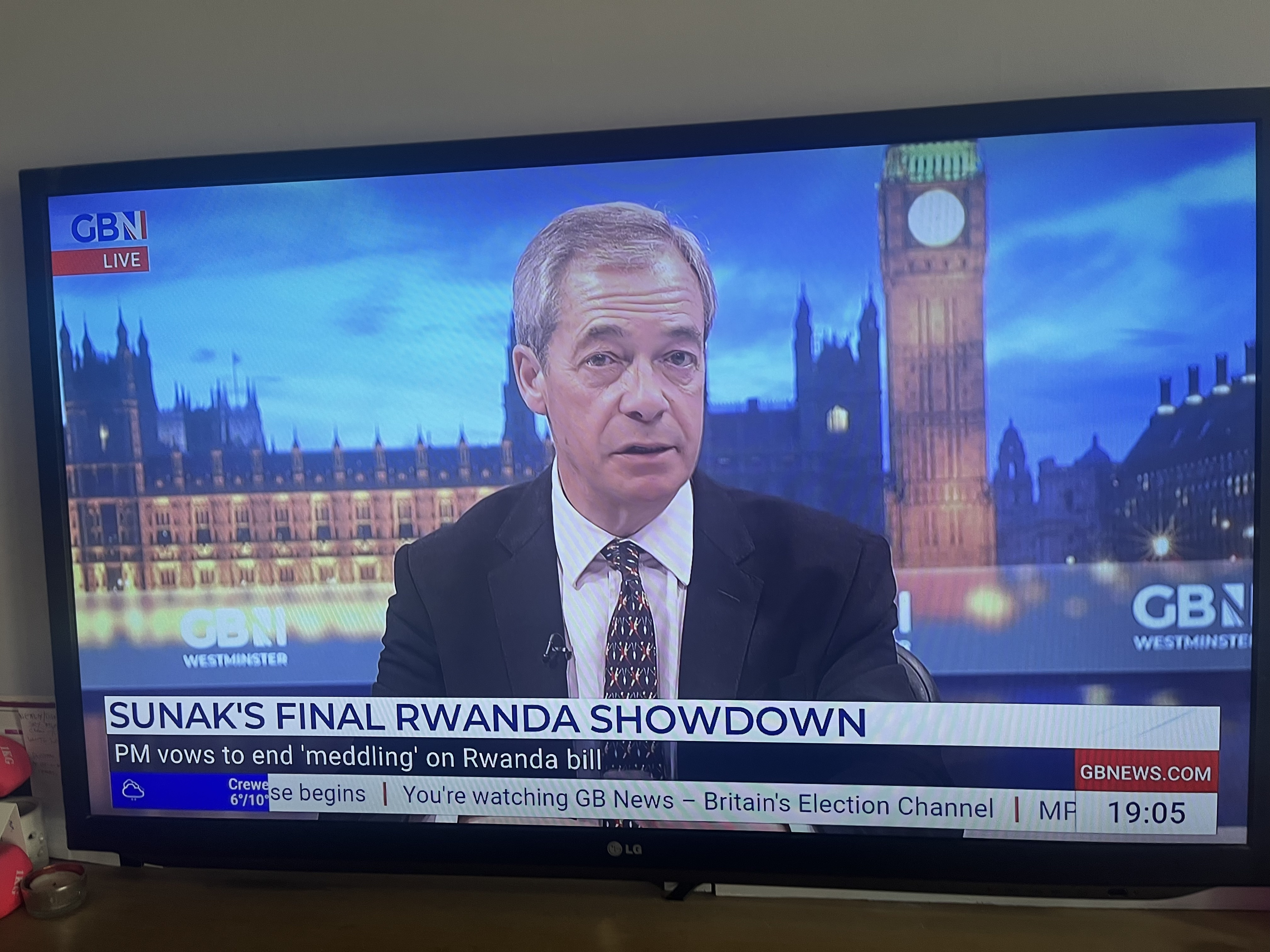
A Yes. Under Ofcom’s current interpretation of their rules the Honorary President of the Reform UK Party, Nigel Farage, who is also a director and co-owner of the party, will be able to present his weeknight prime time programme on GB News unless he stands as a candidate. He will be able to do this throughout the election campaign – even though Reform UK says it will stand around 600 candidates
Q Could a channel host party loyalists from only one side, delivering nightly unchallenged polemics on each day’s campaign news?
A. Yes unless they are candidates. And party officials, assembly members and political activists will all be allowed to interview representatives of their own party every day of the campaign. Ofcom would probably challenge the word ‘unchallenged’ but the truth is that day after day on GB News contentious statements are made and not challenged and there is little regulatory follow-up.
Q. Will channels with poor compliance records and fewer viewers than the public service broadcasters be given greater flexibility in achieving “due impartiality” on the basis of what Ofcom calls “audience expectations”?
A.The suggestion that Ofcom was operating this two-tier system came from none other than the CEO of Ofcom, Dame Melanie Dawes, when she told an event in Oxford ‘the standard for someone like the BBC, which reaches still 70 per cent of the TV viewing audience, [for] the news is a different one from that of a channel that has an audience of maybe four or five per cent of the viewing public. We expect different things. And I think that’s appropriate.”
When challenged before a potential legal action by Professor Julian Petley and the Good Law Practice, Ofcom now say that these were ‘two brief remarks made in the context of a live Q&A interview’ and that the comments ‘were clearly not intended to be, and should not be taken as, an unpublished policy position of Ofcom’. I think that’s Ofcom code for ‘the CEO mis-spoke’.
2. What does the audience research show ?
Ofcom say ‘the report captures a wide range of views but, overall, the audience feedback supports the broad design of existing due impartiality rules under the Broadcasting Code’. Cynics would suggest that’s exactly what the research was designed to do so let’s examine one issue in detail.
Under Ofcom’s current interpretation of the rules politicians cannot present news programmes but they can present ‘current affairs’. As I have pointed out before the distinction between these two genres was not set out in the law that created Ofcom, the regulations Ofcom enforce or the guidance it has provided to broadcasters. It only existed in a blog by an executive. Now Ofcom is taking the opportunity provided by the research to change the guidance to codify the blog. But is that what the audience research really shows?
When the research project was first commissioned the Ofcom Chairman, Lord Grade, took the unusual step of predicting what it would discover, telling a Voice of the Listener and Viewer conference that he was sure the audience would know the difference between news and current affairs.
The evidence from ’29 focus groups with 157 participants from range of backgrounds, reflecting different political leanings and media consumption habits from all across the UK’ tells a different story. This being ‘qualitative’ not ‘quantitative’ the research company Ipsos does not provide numbers of who thinks what but instead attempts to summarise what the groups said.
‘Participants thought they could easily distinguish between news and current affairs content and name common features of both in principle. However, in practice, the presentation and style of these types of content blurred the line between news and current affairs which confused participants particularly when a programme contained both’.
Dig deeper and you find the audience was even more confused. Four of the key characteristics they associated with news programmes but not current affairs : ’studio backdrop / presenter siting behind a desk / rolling banner /ticker’ are all prominent parts of Nigel Farage’s programme which he is only allowed to present because Ofcom deems it ‘current affairs’.
A further irony is that two of the characteristics they associate with news, rolling banners and tickers, don’t actually appear in news programmes such as the BBC’s Six O’Clock News and ITV’s News at Ten.
This was an especially disappointing result for Ofcom when you consider that the ‘stimulus materials’, the video clips shown to the focus groups, did not include any ‘hybrid’ programmes such as BBC Radio Four ‘Today’, Channel Four News, BBC Newsnight and rolling news sections of Sky News which all have elements of both genres. Such clips would have left the focus groups even more confused since most of the people who make them are not sure themselves if they are news or current affairs or both. Ofcom itself also seems confused. Under its definition these hybrid programmes are probably both news and current affairs. But it always seems to investigate them as news.
So if the evidence is that viewers think they know the difference but actually don’t, what do they think of the principle of politicians presenting ‘current affairs’ programmes?
Ipsos is absolutely clear;
‘The most prevalent opinion held among participants was feeling uncomfortable with politicians presenting current affairs content’.
The raw material includes quotes such as
‘I just don’t think politicians should be doing all these current affairs programmes, or not as many. Female, South England, 55+’.
‘It undermines the topic they’re presenting or discussing. To be on the safe side, stick with presenters who aren’t associated with politics in any way.” Female, Midlands, 35-54.’
But do the viewers think the rules should allow politicians to present these programmes?
Ipsos says ‘not everyone in this group thought they should be prevented from doing so’.
Should we be surprised by that when we read that 11 of the 29 groups ‘were conducted with audiences of channels where politicians have been presenting current affairs programmes more regularly’. You might well expect that ‘not everyone’ in these groups would like to stop the programmes they watch. The real question is was there an overall majority of people who thought that politicians shouldn’t present current affairs programmes. Ipsos would know this but we aren’t told.
Instead Ipsos concludes:
‘Across groups there was common concern about politicians presenting current affairs content, but this did not equate to a consensus on preventing them from presenting such content’.
Ofcom go one step further in their press release :
‘People expressed a range of views about politicians presenting current affairs programmes, but although there were concerns, there’s no clear consensus for an outright ban’.
So ‘a prevalent view’ among viewers that they are ‘feeling uncomfortable’ has been diluted to ‘a range of views’
The final twist comes when an Ofcom executive, Cristina Nicolotti Squires, a former ITN colleague, appears on Radio 4’s Media Show and announces :
‘When it came to current affairs they didn’t particularly like politicians presenting it but they didn’t want it banned’.
Now ‘not everybody’ agreed to a ban has been strengthened to ‘they didn’t want it banned’.
Some evidence base.
3.What subjects weren’t the focus groups asked about?
I can’t find any mention of any groups being asked what they thought of the fact that the politicians who present on GB News all come from the same side of the political divide.
Nor, it seems, were they asked what they would consider to be a reasonable proportion of a programme that should be given to views which are an alternative to those of the politicians who gave the opening monologue.
Perhaps Ofcom didn’t want to know the answer.
My colleague, Chris Banatvala adds this important final point : ‘when all is said and done, this qualitative research shows ‘Across groups there was common concern about politicians presenting current affairs content‘. Surely that is the beginning of the debate and not, as Ofcom seems to imply, the end’.
The five ‘guilty’ verdicts by Ofcom against GB News followed by the broadcaster’s angry response suggest there could be an escalating battle between the two sides over the issue of whether politicians, especially MPs, can present political programmes. I doubt it but there could be a bigger, wider and even more important battle ahead.
The creation of GB News has crystallised two separate but sometimes connected issues:
What programmes are serving politicians, especially current MPs, allowed to present on TV ?
When presenters, be they politicians or anybody else, express strong opinions on topical matters how is due impartiality achieved?
Issue 1:What programmes are serving politicians, especially current MPs, allowed to present on TV?
Nothing in the current law, Ofcom Code or Guidance sets out what a serving politician can present, only what they can’t:
‘Rule 5.3: No politician may be used as a newsreader, interviewer or reporter in any news programmes unless, exceptionally, it is editorially justified. In that case, the political allegiance of that person must be made clear to the audience’.
So what is a news programme that a politician can’t present?
The Code itself doesn’t define a news programme but the guidance has this significant section:
‘1.8 In terms of this section of the Code (i.e. the requirement for ‘due impartiality’ and ‘due accuracy’), news in whatever form would include news bulletins, news flashes and daily news magazine programmes’.
One thing is clear : the authors of the guidance intended that the definition of a news programme should cover more than just a news bulletin. ‘News in whatever form’ seems pretty clear. But soon after GB News started inviting politicians from the right – but not the centre or the left – to present daily programmes about the political news of the day Kevin Bakhurst, then the senior Ofcom executive in charge of content regulation, published a blog justifying the practice.
He produced a definition of a news programme which restricted it to a news bulletin. By doing so he argued that the politicians on GB News were not presenting ‘news programmes’ but what he called ‘current affairs’. The term ‘current affairs’ does not appear anywhere in the impartiality sections of the Communications Act, the Ofcom Code on Impartiality or the Ofcom guidance. This was, in effect, Kevin’s Law, there was never a consultation or debate about it. Ofcom now relies upon what was in his blog (he has since left Ofcom) to support its judgements.
The recent Ofcom judgements against GB News show the confusion this has created. When Jacob Rees-Mogg delivers his Moggolgue on that day’s political news, much of which goes unchallenged in the programme, he is apparently a ‘current affairs’ presenter but the moment he mentions breaking news he has been transformed into a ‘news presenter’ which, of course, he’s not allowed to be. Hope you are still with me. The obvious solution is not too difficult, every time news breaks inside these programmes the presenter should hand over to the newsroom presenter. That’s if GB News wants a solution rather than escalate the issue for its own reasons.
But none of this solves the bigger problem as we approach the local and General Elections, should politicians be allowed to present programmes about that day’s political news whether or not you call them News or Current affairs.
The simple and best solution: politicians should not be allowed to present programmes which report and debate the controversial issues of the day especially political news unless there are exceptional circumstances. That’s what we thought the rules said so why not return to that.
Which takes us onto …
Issue 2; When presenters, be they politicians or anybody else, express strong opinions on topical matters how is due impartiality achieved?
This issue has been overlooked during the row about politician presenters but in fact it is equally important .
What the Code currently says:
‘5.9: Presenters and reporters (with the exception of news presenters and reporters in news programmes), presenters of “personal view” or “authored” programmes or items, and chairs of discussion programmes may express their own views on matters of political or industrial controversy or matters relating to current public policy. However, alternative viewpoints must be adequately represented either in the programme, or in a series of programmes taken as a whole. Additionally, presenters must not use the advantage of regular appearances to promote their views in a way that compromises the requirement for due impartiality. Presenter phone-ins must encourage and must not exclude alternative views’.
A number of points arise from this:
The implication of the first part of the first sentence is that news presenters and reporters in news programmes may not express their own views on current controversies or current public policy.
However presenters of non-news programmes can do so subject to the condition that alternative viewpoints must be adequately represented in the programme or a series of programmes. This is explained in the guidance:
‘1.48 Broadcasters are free to include ‘issue-led’ presenters in their programming, as long as they maintain due impartiality as appropriate. In clearly signalled ‘personal view’ programmes, many in the audience are comfortable with adjusting their expectations of due impartiality. However, in order to maintain due impartiality, alternative viewpoints should be adequately represented’.
How adequate does the representation of alternative viewpoints have to be? The Code and Guidance are not prescriptive about this. According to a Guardian article :
‘The broadcast code enforced by Ofcom is clear that opinionated hosts are fine but “alternative viewpoints must be adequately represented”. It has not specified what exactly that means, but GB News insiders believe 10-15% representation for differing views is probably adequate’.
Ofcom refuses to put a figure on ‘adequate’ but I believe the figure of 10-15% is an accurate statement of the view inside Ofcom and GB News. Is that a satisfactory figure for Ofcom when the 85-90% of political views expressed on GB News come from the same perspective in every primetime programme every night?
The implications for the General Election campaign are serious. Ofcom has still not grappled with this issue of whether leading supporters of the same side (only actual candidates are disqualified during election campaigns) can appear night after night giving an unchallenged monologue on that day’s news. On Ofcom’s current interpretation of its code it seems this can continue during an election campaign. Surely that has to change. Can we really have election campaign coverage presented by Boris Johnson and Nigel Farage where they and like-minded folk are free to say what they like about other parties but Labour and Lib Dem supporters get only 10-15% of the programme airtime between them to respond?
THE BBC’S ‘BASHIRGATE’ COUNTDOWN CLOCK IS TICKING.
At the BBC the countdown is underway to a crucial moment in so-called ‘Bashirgate’, one that goes to the heart of how the current BBC Executive have managed recent developments in the affair. The tribunal which hears contested Freedom of Information cases has set a deadline, believed to be January 24th, for the BBC to release documents to journalist Andy Webb. Last month the tribunal strongly criticised the BBC for failing to release a large number of emails relating to Martin Bashir’s 1995 interview with Princess Diana on Panorama. It said the corporation had been “inconsistent, erroneous and unreliable”. Andy Webb wants the release of over 3,000 internal BBC emails sent between September and November 2020 . This period includes the dates between Lord Spencer first asking the BBC for an independent inquiry into the events of 1995, the BBC’s initial reluctance and their eventual decision to agree to what became Lord Dyson’s inquiry.
The BBC can only withhold certain documents if it can convince the tribunal in the remaining days that it has the legal right to do so. A release of key documents would make it possible to compare this internal evidence with the public account given by the Director-General Tim Davie in an interview on the Today programme. A transcript is in my timeline of the Bashir affair.
Last weekend it became clear the BBC is facing further potential jeopardy, that it may have committed a criminal breach of the Freedom of Information Act. A spokesperson for the Information Commissioner’s Office said that following a complaint by Mr Webb under section 77 of the Freedom of Information Act the “case has been referred to the criminal investigations team who are currently reviewing the material provided”. Section 77 says ‘any person to whom this subsection applies is guilty of an offence if he alters, defaces, blocks, erases, destroys or conceals any record held by the public authority’.
This review would be a first step before any more detailed inquiry by the criminal investigations team. Investigation is a most unusual step, there has only been one previous conviction for the offence which carries an unlimited fine.
CAN BROADCASTERS CAMPAIGN?
As a regular critic of Ofcom for what I believe is its failure to enforce the impartiality rules on GB News, I now believe it has gone too far the other way.
Let me explain. Cast your mind back to the General Election election campaign of 2017, that’s the one where ‘strong and stable leader’ Theresa May wasn’t as popular as PM as she thought. Throughout the election campaign she had refused to take part in a head-to-head TV debate with Labour leader Jeremy Corbyn. In the next year, 2018, Sky News launched what it called its ‘Make Debates Happen campaign’. The Head of Sky News was interviewed about it on the air and Sky News started a petition ‘for an independent commission to monitor regular leaders’ debates and make them a permanent election feature.’ Jeremy Corbyn supported it,Theresa May didn’t. I was struck at the time by how unusual it was for a broadcaster to run a public campaign which divided on party lines. Ofcom took no action.
Now Ofcom has decided against GB News after a programme which promoted a ‘GB News- branded campaign called ‘Don’t Kill Cash’. This campaign included a petition which called on the Government to “introduce legislation to protect the status of cash as legal tender’. GB News had argued that the campaign was ‘not about a matter of political controversy or current public policy’.
The decision will leave all broadcasters, not just GB News wondering whether they stand on ‘campaigns’. At ITN I always tried to avoid the word, my advice was ‘call it an investigation’.
‘DORRIES TELLING TRUTH’ SHOCK.
There appears to be growing momentum behind Alan Rusbridger’s admirable campaign to get a proper response from the BBC to allegations that a board member, Robbie Gibb , tried to interfere in the process leading to the appointment of the Chair of Ofcom, which is of course the BBC’s regulator. The issue was raised by MPs during the hearing to confirm the new BBC Chair but Samir Shah didn’t want to comment on it. This month there was also evidence from a source ‘who worked closely with’ Nadine Dorries when she was DCMS Secretary. It was Ms Dorries who first made the allegation against Gibb in her her book ‘The Plot’. The book has been widely criticised for being less than factual but this particular allegation has never been denied by anybody. Jake Kanter, a widely respected media correspondent now working for the American website Deadline, reports that the source tells him that Gibb “campaigned” for his preferred candidate to become Ofcom chair.

 ProfPurvis